
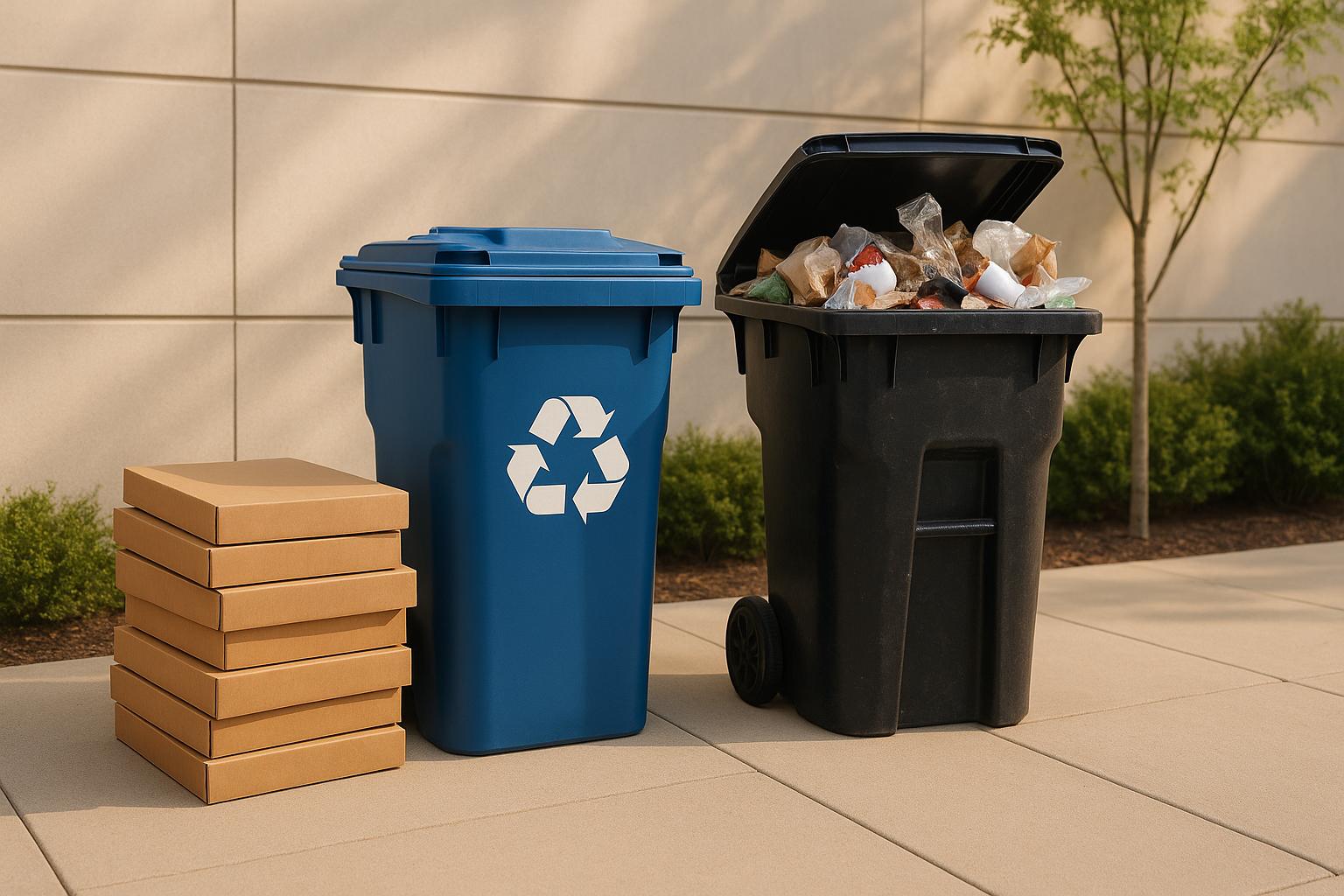
Cardboard Recycling vs Regular Waste Disposal
Recycling cardboard instead of throwing it away isn’t just about being environmentally conscious – it can help your business save money, improve operations, and boost your brand image. Here’s what you need to know:
- Recycling reduces costs: Landfill fees are high, and recycling can significantly cut waste disposal expenses. Plus, clean, sorted cardboard can be sold or earn rebates through recycling programs.
- It’s better for the planet: Recycling prevents cardboard from ending up in landfills, where it produces methane, a harmful greenhouse gas. It also conserves resources by reusing materials.
- Improves efficiency: Flattened and compacted cardboard takes up less space, making storage and waste management easier.
- Enhances brand perception: Customers and employees value businesses that show responsibility by recycling, which can lead to stronger loyalty and trust.
Quick Comparison:
| Factor | Regular Waste Disposal | Cardboard Recycling |
|---|---|---|
| Cost | Higher landfill fees | Lower costs and potential revenue |
| Environmental Impact | Methane emissions, waste buildup | Reduces emissions, conserves resources |
| Storage | Bulky and disorganized | Compact and manageable |
| Brand Benefits | No added value | Positive perception and trust |
Switching to recycling is a smart move for your business. It saves money, simplifies operations, and aligns with customer and employee values. Services like Cardboard Cage make the transition easy with tailored solutions for businesses of all sizes.
Environmental Impact: Recycling vs Regular Waste Disposal
Recycling cardboard instead of sending it to landfills leads to noticeable environmental benefits. By treating cardboard as a reusable resource rather than waste, we can improve air quality, cut down on harmful emissions, and reduce the strain on natural resources. Let’s break down how recycling helps reduce landfill emissions and conserves vital resources.
Cutting Landfill Waste and Emissions
When cardboard ends up in landfills, it breaks down in low-oxygen conditions, producing methane – a greenhouse gas far more potent than carbon dioxide. On top of that, the decomposition process can create toxic leachate, which poses a risk to groundwater. Recycling offers a way to sidestep these issues, reducing the environmental harm caused by traditional waste disposal.
Saving Resources and Encouraging Reuse
Recycling cardboard helps ease the pressure on landfills while conserving valuable resources. Compared to making cardboard from raw materials, recycling requires less energy and water. Plus, it gives cardboard fibers a second (or even third) life, allowing them to be reused multiple times. This process feeds into a cycle where materials are continuously repurposed, cutting down on the need for raw material extraction and energy-heavy manufacturing.
Financial Benefits: Cost Savings and Revenue Potential
Recycling cardboard isn’t just good for the planet – it can also make a lot of sense for your bottom line. Many businesses that switch from traditional waste disposal to recycling find themselves saving money and even uncovering new ways to generate revenue. These financial advantages go hand in hand with the environmental perks, making recycling a smart move for any business.
Lower Waste Disposal Fees and Costs
Dumping waste in landfills comes with hefty tipping fees, and those costs can add up quickly. By diverting cardboard from the landfill, businesses can significantly reduce the volume of waste they send there. Less waste means lower fees.
But it doesn’t stop there – these savings can be paired with recycling incentives, which might even bring in some extra cash.
Revenue Opportunities Through Recycling Programs
Recycling isn’t just about cutting costs – it can also become a source of income. Clean, sorted cardboard holds value in the recycling market. Many programs offer rebates or even direct payments for high-quality materials. Businesses that take advantage of these programs can turn what was once waste into a revenue stream.
Cost Comparison: Recycling vs. Regular Waste Disposal
When you stack up the numbers, recycling cardboard often comes out ahead of traditional disposal methods. Here’s a side-by-side look at the financial differences:
| Cost Factor | Regular Waste Disposal | Cardboard Recycling |
|---|---|---|
| Disposal Fees | Higher, due to substantial landfill fees | Lower fees thanks to reduced waste volumes |
| Container Needs | Larger, mixed-waste containers required | Smaller, dedicated cardboard containers |
| Collection Frequency | Frequent pickups for mixed waste | Fewer pickups with segregated cardboard |
| Revenue Potential | No income generated | Rebates or payments for recyclable material |
| Storage Efficiency | Bulky, disorganized storage | Compact, organized cardboard storage |
Recycling not only trims waste management costs but also offers a smarter, more organized approach to handling materials. And when done right, it can even turn into a profitable business practice.
How Cardboard Recycling Improves Business Operations
Recycling doesn’t just save money and cut emissions – it also makes day-to-day operations smoother. By keeping cardboard separate from general waste, businesses can create a cleaner, more organized workspace. Let’s explore how better storage and streamlined collections can make a big difference.
Better Storage and Space Management
Cardboard waste has a way of piling up fast, turning valuable space into a cluttered mess. Unflattened boxes not only take up room but can also pose safety risks. As Harvard Business Review points out:
“The physical environment of the workplace has a significant effect on the way that we work. When our space is a mess, so are we.”
Implementing a recycling program encourages businesses to break down and flatten cardboard, which drastically reduces its size. In fact, compacting or baling cardboard can shrink its volume by a ratio of 5:1 or even 10:1, opening up space for inventory, equipment, or other essentials. Many businesses that invest in recycling equipment, like vertical or horizontal balers, notice immediate improvements. Instead of chaotic piles, they’re left with neatly compressed stacks that are easier to manage.
Streamlined Waste Collection
When cardboard isn’t separated, it can quickly fill up waste containers, leading to more frequent pickups – and higher hauling costs. On the other hand, sorting and compacting cardboard reduces container volume, which means fewer pickups are needed. Programs like Cardboard Cage simplify the entire process, handling everything from container delivery to scheduled pickups. This cuts down on waste collection costs and frees up employees to focus on other tasks.
A well-organized recycling system not only keeps waste collection efficient but also helps businesses monitor and plan for waste peaks, making operations more predictable and space more usable.
Building Brand Value Through Recycling
Today’s consumers and employees expect businesses to demonstrate care that goes beyond just making profits. Companies that embrace cardboard recycling not only take a step toward environmental responsibility but also strengthen their brand by aligning with values that resonate deeply with their audience.
Corporate Reputation and Consumer Trust
Sustainable practices have the power to set your brand apart. Choosing cardboard recycling over traditional waste disposal sends a strong message about environmental accountability, which can directly influence consumer decisions. According to a PwC survey, consumers are willing to pay 9.7% more for products that are sustainably produced or sourced. For a business generating $1 million in revenue, that could mean an additional $97,000. This commitment to sustainability doesn’t just attract customers – it builds trust and creates a positive narrative around your brand. And when consumers see your company leading by example, it not only boosts external credibility but also fosters a culture of pride and loyalty among employees.
Employee Engagement and Company Culture
Recycling programs can do more than reduce waste – they can reshape workplace culture. When employees see their company taking meaningful steps toward environmental responsibility, it fosters a sense of shared purpose. Getting employees involved in recycling efforts enhances engagement, job satisfaction, and even retention. For younger employees in particular, who often prioritize working for environmentally conscious employers, this kind of commitment can be a major draw. By weaving recycling into the fabric of your company’s identity, you create a workplace environment that reflects shared values, which in turn amplifies your external reputation.
How to Start Cardboard Recycling with Cardboard Cage
Switching from traditional waste disposal to cardboard recycling can be straightforward, especially with the help of Cardboard Cage. By adopting their services, your business can cut waste disposal costs while contributing to environmentally responsible practices. The key lies in following effective recycling practices and selecting a service that matches your business needs. Below, we’ll outline the steps that make recycling with Cardboard Cage an easy and efficient process.
Keeping Cardboard Clean and Dry
The foundation of a successful cardboard recycling program is proper preparation. Clean, dry cardboard is crucial because wet or contaminated materials often can’t be recycled and may end up in landfills. Employees should break down boxes completely, remove any non-cardboard elements like tape, staples, and plastic labels, and keep cardboard away from food waste, liquids, or other contaminants. While small amounts of tape aren’t a dealbreaker, removing as much as possible improves the quality of the recycled material. Setting up a designated area for clean cardboard storage helps keep things organized and makes collection more efficient.
Water damage is a particular challenge. Wet cardboard loses its structure and can contaminate other recyclables. To prevent this, store cardboard in a dry location, away from moisture-prone areas like loading docks or kitchens. This simple step ensures your materials retain their recycling value.
How Cardboard Cage Makes Recycling Easy
Cardboard Cage takes the hassle out of recycling with a system designed for convenience and dependability. They provide sturdy recycling cages that keep cardboard organized and protected, along with scheduled pickups tailored to your business operations.
It all starts with cage delivery and setup at your location. Multiple cage sizes are available to accommodate businesses of different sizes, from small retail shops to large warehouses generating significant cardboard waste daily.
The service also features a QR code–based pickup system. When your cage is full or you need an extra pickup, simply scan the QR code to request service – no need for phone calls or complicated scheduling. This tech-driven approach minimizes administrative effort and ensures timely pickups.
Once the cardboard leaves your facility, professional recycling services handle the rest. They sort, process, and ensure the materials are sent to proper recycling facilities, avoiding landfills. With clear pricing and no hidden fees, managing your waste budget becomes much easier.
Choosing the Right Plan for Your Business
Selecting the right Cardboard Cage plan depends on factors like your waste volume, business size, and operational needs. Start by evaluating how much cardboard your business generates and how often you’ll need collection services.
- Small businesses: The Basic Plan is ideal for retail stores, small offices, or restaurants with moderate packaging waste. It includes cage delivery, scheduled pickups, and recycling services.
- Medium-sized businesses: The Standard Plan offers more flexibility, including multiple cage sizes and QR code–based pickup requests. This plan suits businesses with variable waste volumes or multiple locations.
- Large enterprises: The Enterprise Plan is designed for large warehouses or industrial operations, offering scalable solutions and support for multiple sites.
Once you’ve assessed your waste output, storage needs, and operational capacity, choosing the right plan becomes easier. Custom quotes ensure you only pay for the services your business requires. Additionally, understanding local regulations is essential to ensure your recycling program complies with environmental guidelines and reporting requirements. This helps your business stay both efficient and compliant.
Conclusion: Why Recycling Cardboard is the Better Choice
Recycling cardboard stands out as a smarter alternative to regular waste disposal. It delivers clear benefits across the board – helping the environment, saving money, and improving day-to-day operations.
By recycling, businesses can lower landfill contributions, reduce disposal costs, and even save money in the process. It also promotes a cleaner, more organized workspace by streamlining storage and waste collection. Beyond the practical advantages, companies that commit to recycling enhance their brand image, strengthen their reputation, and appeal to environmentally conscious customers and stakeholders.
Cardboard Cage simplifies the entire recycling process. From delivering and setting up cages to scheduling pickups and ensuring professional recycling, their service covers every step. With flexible plans tailored to businesses of all sizes, Cardboard Cage ensures that recycling fits seamlessly into any operation – whether you’re a small shop or a large-scale warehouse managing significant cardboard waste.
The benefits are undeniable: cost savings, improved efficiency, and a positive environmental impact. Recycling cardboard is not just a responsible choice; it’s an investment in the future of your business. Services like Cardboard Cage make it easier than ever to transition from traditional waste disposal to a more sustainable and efficient recycling system.
Make the switch today and experience the financial and environmental rewards of smarter recycling.
FAQs
How can recycling cardboard help businesses save on waste disposal costs?
Recycling cardboard can help businesses cut down on waste disposal costs by decreasing the amount of material sent to landfills. Since many waste management companies base their charges on the weight or volume of trash, diverting cardboard to recycling programs can translate into noticeable savings.
On top of that, some recycling services provide rebates or financial incentives for properly sorted cardboard. This means what would typically be an expense could actually become an additional source of income. By adopting effective recycling practices, businesses not only reduce costs but also play a part in promoting a cleaner, greener future.
What are the environmental consequences of throwing cardboard in the trash instead of recycling it?
Throwing cardboard into the trash comes with serious consequences for the environment. When cardboard ends up in landfills, it decomposes without oxygen, producing methane – a potent greenhouse gas that contributes significantly to climate change. On top of that, landfills take up valuable space that could be put to better use.
On the flip side, recycling cardboard offers numerous benefits. It helps cut down greenhouse gas emissions, preserves important natural resources like trees and water, and reduces energy consumption. By recycling, we also minimize the demand for new raw materials, making it a smarter and more responsible choice for both businesses and individuals.
What are the best steps for businesses to start a cardboard recycling program?
To kick off a successful cardboard recycling program, businesses need to begin by assessing how much cardboard waste they produce and pinpointing the best locations for recycling bins. Choosing a reliable recycling provider is crucial – they can help establish consistent collection schedules and guide you on proper recycling practices.
It’s also important to train employees on the basics, like flattening boxes and keeping cardboard free from contaminants such as food or liquids. These steps not only make the recycling process more efficient but can also cut down on waste disposal costs. Over time, a well-organized recycling program can lead to noticeable savings and support a greener, more efficient operation.