
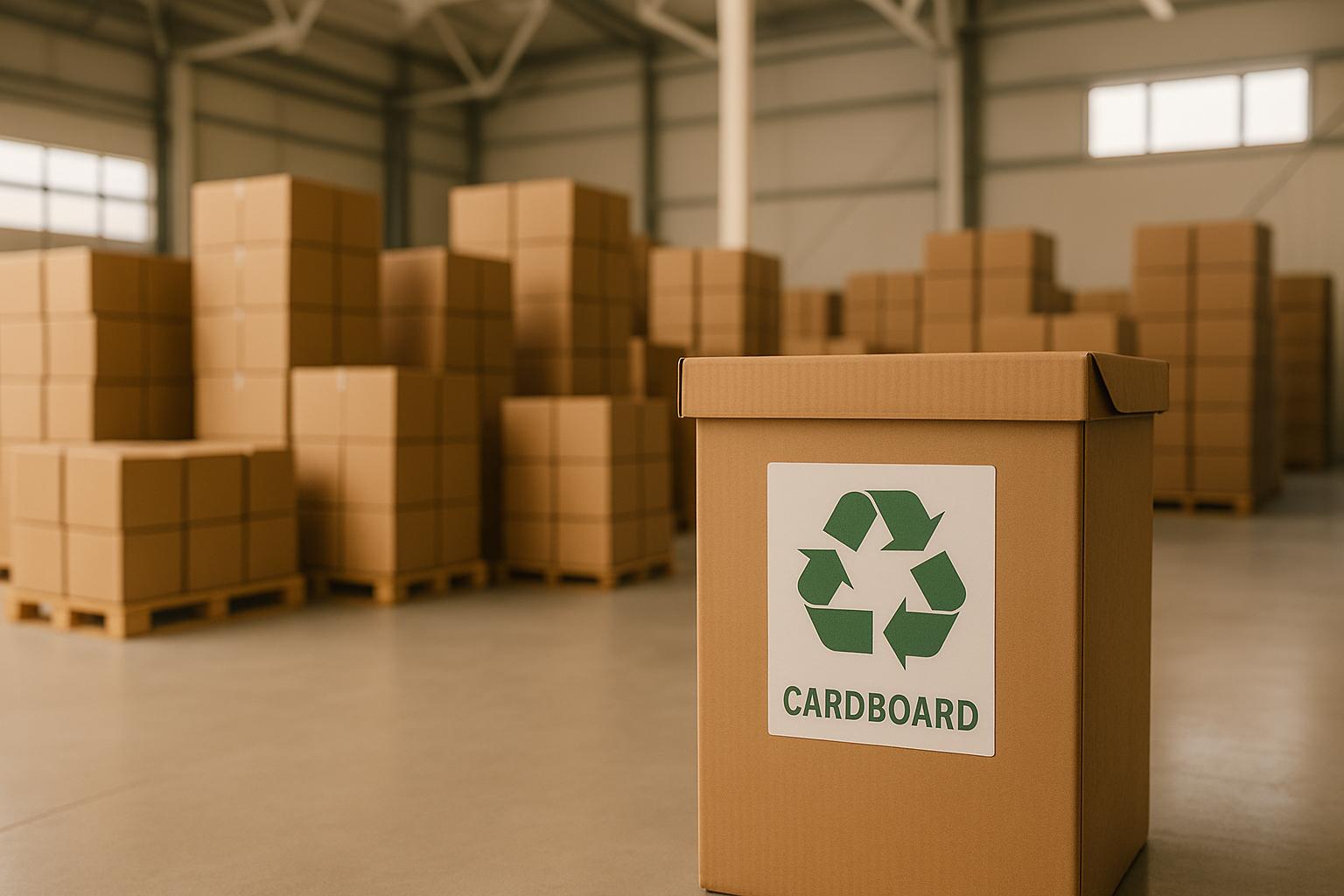
Warehouse Cardboard Recycling: Common Questions
Cardboard recycling in warehouses can save money, improve organization, and reduce waste. Here’s how to make the process work for you:
- Collection: Place bins at high-use areas like docks and unpacking stations. Use clear labels to prevent contamination.
- Equipment: Use compactors or balers to compress cardboard, cutting storage needs by up to 90%. Recycling cages help keep materials organized.
- Preparation: Flatten boxes to reduce volume by 80%. Remove tape or labels to ensure clean recycling.
- Pickups: Schedule pickups based on your output. Consolidate loads to save costs and reduce trips.
- Cost-Saving Tips: Negotiate flexible service agreements, separate cardboard from mixed waste, and explore selling baled materials for extra revenue.
Efficient recycling programs can lower disposal costs, simplify logistics, and improve your facility’s waste management. Start by setting up clear systems and training your team to follow best practices.
The Best Way to Break Down, Flatten, and Store Cardboard Boxes
How to Collect Cardboard in Warehouses
Managing cardboard collection in a warehouse starts with understanding how your team operates. The goal? Make recycling the simplest and most convenient option. By integrating these strategies into your warehouse’s recycling efforts, you can streamline storage and processing.
Setting Up Collection Areas
Where you place collection bins can make or break your recycling program. Place recycling bins at key points like unpacking stations, receiving docks, and other spots where cardboard piles up naturally. Use clear labels with bold fonts and pictures to make it obvious what belongs in each bin. During busy times, you can add extra bins near temporary work areas to handle the increased volume.
Equipment for Cardboard Collection
To handle large amounts of cardboard efficiently, the right equipment is essential. Tools like compactors and balers can compress cardboard by up to 90%. This not only saves storage space but also cuts down on pickup frequency and transportation costs – all while increasing the market value of baled materials. Cardboard Cage offers durable and scalable recycling cages that fit seamlessly into warehouse operations. Beyond equipment, addressing common collection issues can further improve the process.
Addressing Typical Collection Issues
Contamination is a common problem when collecting cardboard. To avoid this, make sure bins are used exclusively for cardboard. Encourage workers to remove tape, labels, and other non-cardboard materials before tossing items into the bins. This keeps the materials clean and ready for recycling.
Regular training sessions can reinforce these practices. When employees understand how recycling benefits both the environment and the company’s bottom line, they’re more likely to stay engaged in keeping the process efficient.
Storage and Preparation of Cardboard
Once you’ve gathered your cardboard, how you prepare and store it can make a big difference in space management and transport efficiency. Start by focusing on reducing its volume – flattening boxes is key.
Breaking Down and Flattening Cardboard
Flattening cardboard boxes can cut their volume by as much as 80%. Make it a habit for your team to flatten boxes right after unpacking. It’s simple: remove the tape, fold the flaps inward, and press the box flat. This not only makes the cardboard easier to handle but also simplifies stacking and transport.
Storage Options for Different Warehouse Sizes
The way you store cardboard should match the size of your warehouse and the amount of cardboard you handle. Here are some practical storage solutions:
| Storage Solution | Ideal For |
|---|---|
| Recycling Cages | Keeping storage organized and accessible |
| Cardboard Balers | High-volume operations; saves up to 90% space |
| Compactors | Large facilities needing heavy-duty compression |
These options help maximize floor space while keeping your recycling process efficient.
Recycling Process and Pickup Logistics
Efficient collection and storage are just the beginning. To run a smooth recycling program, it’s key to understand how the recycling process works and how to manage pickups effectively. Here’s a closer look at what happens after your cardboard is collected and how to keep logistics running seamlessly.
What Happens to Recycled Cardboard?
After leaving your facility, cardboard enters a transformation process. At the recycling center, it’s sorted by grade, and any contaminants – like plastic tape, staples, or food residue – are removed. Once cleaned, the material is processed, often through pulping, to recover fibers. These fibers are then used to produce new paper products, such as packaging materials. This cycle not only cuts down on the need for raw materials but also promotes a more sustainable approach to resource use.
Scheduling and Managing Pickups
Keeping your recycling program running smoothly requires well-organized pickup schedules. Aligning pickups with how often your facility generates cardboard can prevent disruptions. For many warehouses, weekly or bi-weekly pickups work well, but operations with higher volumes might need more frequent service.
Modern tools make scheduling easier. For instance, QR code–based pickup systems, like those offered by Cardboard Cage, allow you to request service instantly – no phone calls or emails required. Just scan the code, and the system will automatically schedule a pickup, saving time and simplifying the process.
It’s also important to stay in communication with your recycling provider. Let them know about any changes in your cardboard output, such as seasonal fluctuations or special events, so they can adjust the schedule as needed.
Making Pickups More Efficient
To save both money and resources, consider consolidating loads. Instead of scheduling a pickup every time a single cage is full, wait until multiple cages are ready or your storage is nearing capacity. Fewer trips mean lower costs and a smaller environmental footprint.
Timing matters, too. If most of your cardboard comes in with morning deliveries, scheduling pickups for later in the day or the next morning gives your team time to break down and store the material. This ensures everything is ready for collection without rushing.
Make sure your pickup areas are easy to access and clearly marked. Drivers should be able to reach your cardboard storage without navigating through busy work zones or blocking essential areas like loading docks. A designated pickup zone near your storage area can speed up the process and keep operations running smoothly.
Lastly, keep detailed records of your pickups, including dates, volumes, and any issues that arise. These records not only help track your program’s performance but also provide useful data for improving operations or negotiating with service providers.
Reducing Costs and Improving Recycling Programs
Once efficient pickups are in place, the next step is to focus on trimming costs and refining your recycling program. A well-run cardboard recycling program not only supports environmental goals but can also reduce operational expenses. By adopting smart strategies, you can make your warehouse more efficient while keeping costs in check.
Cutting Disposal Costs
Sorting cardboard from general waste is a simple way to save money. Mixed waste disposal tends to cost more than recycling clean, sorted cardboard. Using dedicated recycling cages helps keep cardboard free from contamination, ensuring it retains its recycling value.
You can also save by negotiating volume-based pricing with your recycling provider. Flexible service agreements allow you to adjust for seasonal changes, so you’re not paying for services you don’t need during slower periods. Timing your contract renewals strategically – when market demand is low – can also help you lock in better rates.
These steps create a strong foundation for a cost-effective and efficient recycling program.
Building Better Recycling Programs
A streamlined recycling program doesn’t just improve logistics – it can also deliver long-term benefits for your warehouse. Clear and consistent waste management systems make it easier for employees to follow procedures, reducing contamination and boosting compliance.
Cardboard Cage offers tools to simplify recycling operations, including cage delivery, scheduled pickups, and a QR code–based system for easy scheduling. These services minimize upfront costs for equipment and reduce administrative workload, making recycling more manageable.
A well-structured program also simplifies sustainability reporting. Many businesses find that effective recycling practices help them meet environmental goals while improving their reputation with clients who prioritize eco-friendly practices. Plus, professional recycling programs are scalable, meaning they can grow and adapt as your business expands.
Comparing Cost-Saving Options
Here are three approaches to consider for managing your recycling costs:
- DIY Collection: This involves buying your own containers and arranging transportation. While it may seem cost-effective at first, hidden costs like labor, maintenance, and compliance can add up quickly.
- Professional Service: Outsourcing your recycling needs can save on internal labor and provide reliable pickup schedules. This option works best when your cardboard volume justifies a dedicated service.
- Hybrid Approach: Combining internal efforts with professional services offers flexibility. For instance, you might handle collection in-house but outsource pickups and recycling. This method balances the benefits of both DIY and professional solutions.
The right choice depends on how much cardboard your warehouse generates and your specific operational needs. Be sure to factor in hidden costs like labor, equipment upkeep, and lost storage space when deciding which approach works best for your business.
Key Points for Warehouse Cardboard Recycling
Effective warehouse cardboard recycling relies on streamlined systems that combine environmental awareness with operational practicality. It all starts with proper waste segregation. Using clearly marked bins or cages in receiving and sorting areas ensures cardboard stays separate from general waste. This simple step preserves its recyclability and helps cut down on disposal expenses. When implemented as part of a larger recycling strategy, these efforts boost efficiency while keeping costs in check.
Flattening cardboard boxes can reduce their volume by up to 80%. This not only saves space but also makes handling, storage, and transportation much easier. Training employees to flatten boxes as part of their routine can lead to immediate space savings and fewer waste pickups.
For warehouses that generate around 20 loose cubic yards of cardboard weekly, investing in a cardboard baler can be a game-changer. These machines compress cardboard into compact, stackable bales, reducing waste volume by up to 90%. Beyond saving space, balers can also create an opportunity to generate revenue by selling the bales, especially when paired with organized pickup schedules to keep costs predictable.
Another smart move is partnering with suppliers to rethink packaging. Transitioning to reusable options, like plastic crates or collapsible containers, reduces waste at the source. This proactive approach often delivers better results than dealing with waste after it’s been created.
Proper segregation also helps cut costs since disposing of mixed waste is far more expensive than recycling clean cardboard. Scheduling regular pickups keeps handling costs low, and volume-based pricing or flexible service agreements can prevent paying for unnecessary services during slower periods.
These strategies contribute to a circular economy by prioritizing the reuse and reprocessing of materials. The benefits? Lower disposal costs, safer and more organized workspaces, and a stronger environmental profile that resonates with eco-conscious clients.
FAQs
What are the best ways for warehouses to keep their cardboard recycling bins free from contamination?
To ensure cardboard recycling bins stay clean and usable, warehouses should stick to a few straightforward practices. Start by removing any non-cardboard materials like tape, plastic, or staples before placing the cardboard in the bin. It’s also important to avoid recycling cardboard that’s been contaminated with food grease or liquids, as this can render it unsuitable for processing. Lastly, skip using plastic bags to collect or transport cardboard, since these can disrupt the recycling process.
By sticking to these steps, warehouses can keep their recycling efforts efficient and environmentally responsible.
What are the advantages of using a hybrid approach for managing warehouse cardboard recycling?
Using a mix of on-site and external services for warehouse cardboard recycling can be a smart way to manage waste efficiently. This hybrid approach lets you handle parts of the process internally – like baling or compacting cardboard – while leaving tasks such as transportation or advanced processing to a recycling partner.
This method can cut costs by reducing how often materials need to be transported and making those trips more efficient. At the same time, it gives you more control over waste management within your facility. Plus, it supports environmental initiatives by streamlining operations and ensuring recyclable materials are properly managed. For warehouses aiming to combine efficiency with eco-friendly practices, this approach strikes a practical balance.
How can warehouses reduce costs by negotiating better deals with recycling providers?
Warehouses can cut down on recycling expenses by locking in long-term agreements with recycling providers. These contracts often result in lower rates and more stable costs, making it easier to plan budgets effectively.
To get the best deal during negotiations, it’s crucial to know the volume of cardboard waste your facility generates and your specific recycling requirements. Providers are often willing to offer better prices if you can promise steady, high-volume pickups or if your sorting processes minimize contamination. You might also want to consider flexible service arrangements, like adjusting pickup schedules to match seasonal demand, as another way to keep costs under control.